Common tankless water heater problems we repair
Tankless units are reliable, but they rely on sensors and precise gas and water flow. These are the issues we see most often:
- Error codes on the display and units that shut down mid-shower
- Ignition failure or flame failure on gas models
- Mineral scale buildup reducing flow and heat
- Fluctuating water temperature
- Venting blockages and air intake problems
- Leaks at fittings or the heat exchanger
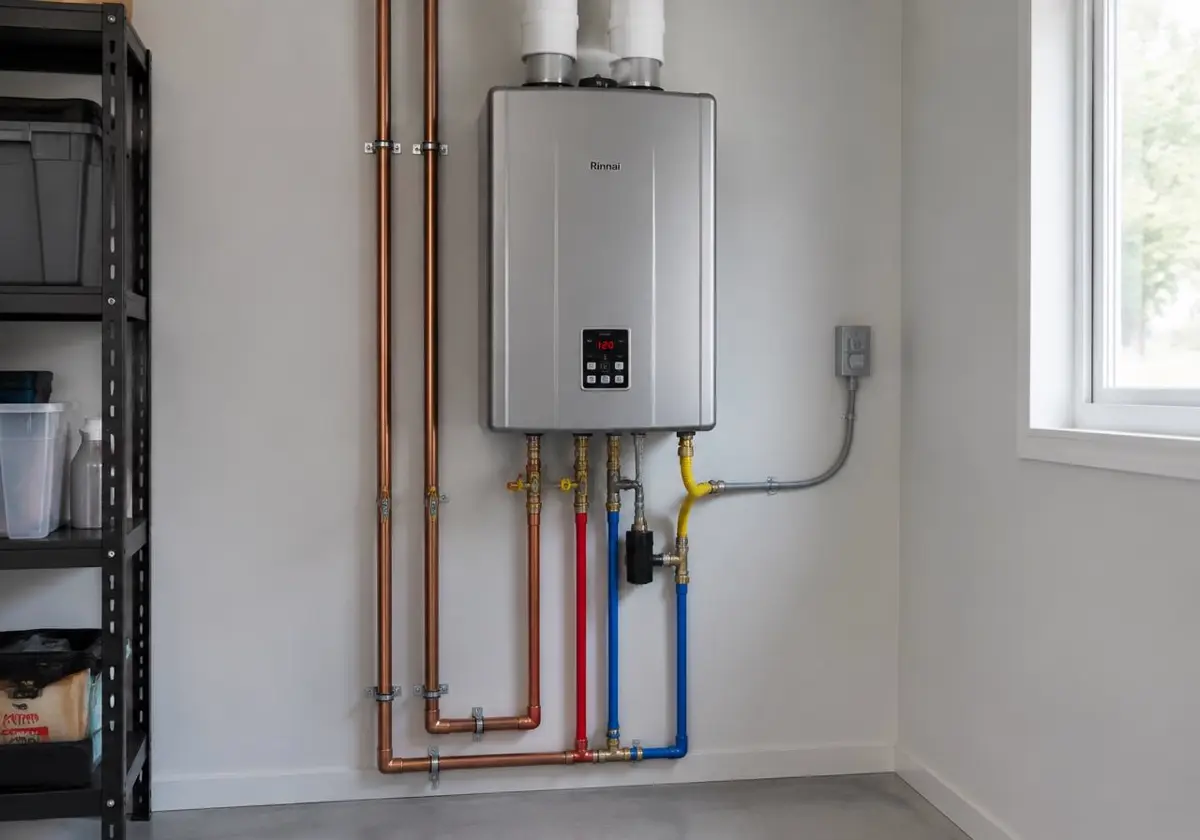
Why descaling matters for tankless units on Long Island
Many Long Island homes have hard water that leaves mineral deposits inside the heat exchanger. Over time, scale restricts flow, triggers overheating sensors, and lowers efficiency.
Flushing the unit with a descaling solution through the service valves often restores performance. If your tankless unit lacks service valves, we can add them so future maintenance is simple.
Repair or replace a tankless water heater?
Most tankless problems can be repaired because parts like sensors, igniters, and flow switches are replaceable. A repair is usually the right call for units under 15 years old.
Replacement makes sense when the heat exchanger has cracked or leaked, or when parts are no longer available for an older model.
Call for tankless repair if you notice
- An error code that keeps returning
- No hot water even though the unit has power and gas
- Hot water that turns cold mid-shower
- Reduced hot water flow at faucets
- Water dripping from the unit or its connections
- A gas smell near the unit — leave and call your utility
If you smell gas, leave your home immediately and call your gas utility or 911 from outside before calling us.
Tankless acting up? Call for repair.
(631) 840-6625Repair or replace: which makes sense for you?
Sensor, igniter, and flow switch failures are usually worth repairing.
A leaking heat exchanger usually means it's time for a new tankless water heater or a different system.
Still unsure? Our water heater repair vs. replace guide walks through tank age, repair cost, efficiency, leaks, and rust so you can decide with confidence. You can also compare water heater repair and water heater replacement on Long Island.
Why hire a licensed Nassau or Suffolk County plumber
Water heaters connect to your gas, electric, and water supply, so mistakes can cause leaks, scalding, or carbon monoxide hazards. A plumber licensed in Nassau or Suffolk County knows local code requirements and installs safety devices correctly.
Many Long Island towns and villages require permits and inspections for water heater work, especially gas units. Requirements vary by municipality, so we confirm what your town needs before the job starts.
Related water heater services on Long Island
- Tankless Water Heater Installation on Long Island
- Water Heater Repair on Long Island
- Emergency Water Heater Repair on Long Island
- Towns we serve in Nassau and Suffolk
Ready to talk to someone? Contact us to schedule service or get a free estimate.
Tankless Water Heater Repair FAQs
Why does my tankless water heater show an error code?
Error codes are the unit's way of reporting a specific fault, such as ignition failure, overheating, or a flow problem. Each manufacturer uses different codes, so the meaning varies by brand. Write down the code before you call so the technician can bring the right parts.
Why do I have no hot water from my tankless unit?
Common causes include a gas supply issue, ignition failure, a clogged inlet filter, heavy scale buildup, or a flow rate too low to activate the burner. Some of these are quick fixes; others need parts. A diagnostic visit identifies the exact cause.
How often should a tankless water heater be flushed?
Most manufacturers recommend descaling about once a year, and more often in homes with hard water. Regular flushing keeps the heat exchanger clean and helps prevent overheating errors. We can set up a reminder for annual maintenance.
Is a tankless water heater worth repairing?
Usually, yes. Tankless units are built for long lifespans and most parts are replaceable. Replacement only makes sense when the heat exchanger has failed or the unit is old enough that parts are hard to get.