How a tankless water heater works
A tankless water heater heats water only when you open a hot water tap. Instead of keeping 40 or 50 gallons hot all day, it fires a burner or element as water flows through a heat exchanger.
Because there's no storage tank, you don't run out of hot water during back-to-back showers, and you avoid the energy lost keeping a tank warm overnight.
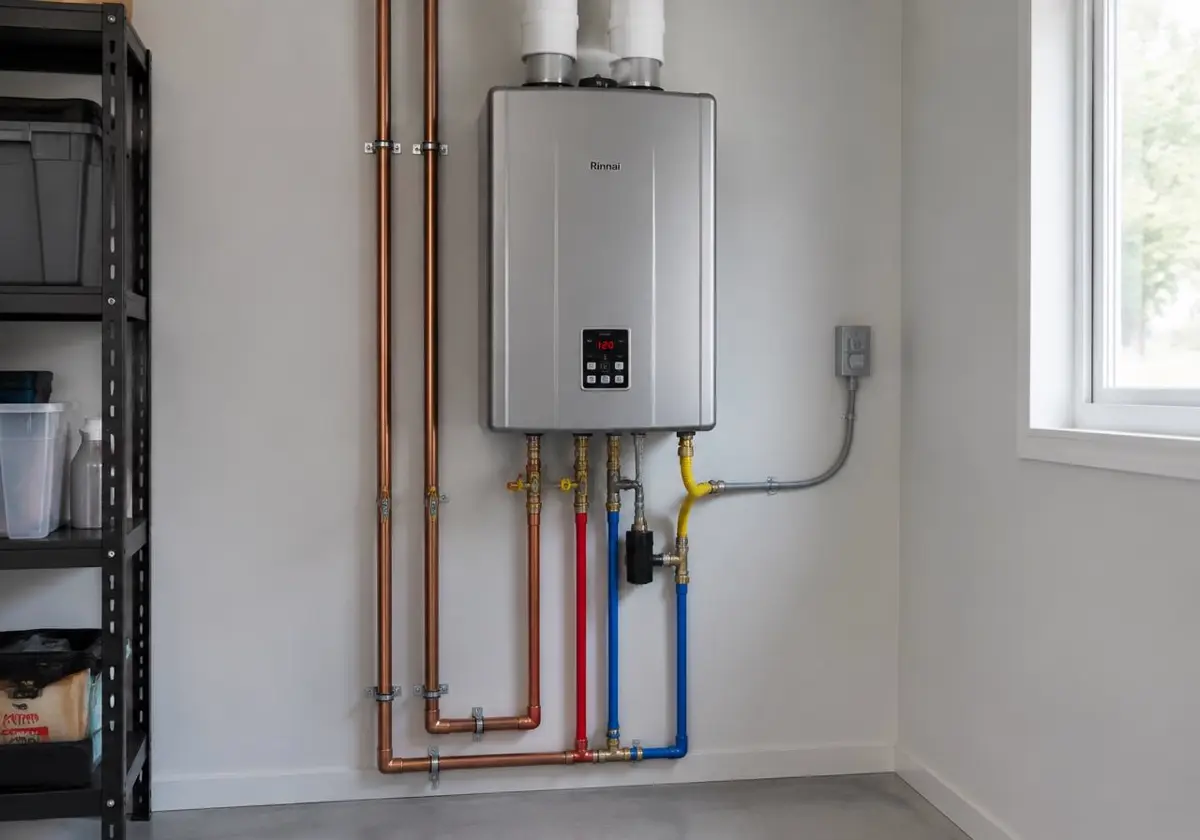
Is tankless right for your Long Island home?
Tankless water heaters suit households that run out of hot water, want to free up basement or utility space, or plan to stay in their home long enough to benefit from lower operating costs.
They're less ideal when the existing gas line or electrical service can't support the unit without major upgrades. We'll check your home's gas supply, venting route, and electrical capacity before recommending tankless.
What tankless water heater installation involves
A proper tankless installation is more involved than a standard tank swap. Most jobs include:
- Removing and disposing of the old tank water heater
- Mounting the tankless unit on a wall
- Upsizing the gas line where needed for the unit's demand
- Installing new direct venting through a wall or roof
- Adding isolation valves so the unit can be flushed for maintenance
- Configuring temperature settings and testing flow
Signs it's time to consider tankless
- You regularly run out of hot water
- Your current tank is over 10 years old
- You're short on space in a basement, closet, or garage
- Your current water heater is leaking or rusting
- You want lower standby energy loss
If you smell gas, leave your home immediately and call your gas utility or 911 from outside before calling us.
Call now to plan your tankless installation.
(631) 840-6625Repair or replace: which makes sense for you?
If your current tank still works well, there's no need to rush — tankless is usually installed when the old tank needs replacing.
If your tank is failing anyway, upgrading to tankless at replacement time avoids paying for two installations.
Still unsure? Our water heater repair vs. replace guide walks through tank age, repair cost, efficiency, leaks, and rust so you can decide with confidence. You can also compare water heater repair and water heater replacement on Long Island.
Why hire a licensed Nassau or Suffolk County plumber
Water heaters connect to your gas, electric, and water supply, so mistakes can cause leaks, scalding, or carbon monoxide hazards. A plumber licensed in Nassau or Suffolk County knows local code requirements and installs safety devices correctly.
Many Long Island towns and villages require permits and inspections for water heater work, especially gas units. Requirements vary by municipality, so we confirm what your town needs before the job starts.
Related water heater services on Long Island
- Tankless Water Heater Repair on Long Island
- Water Heater Replacement on Long Island
- Gas Water Heater Replacement on Long Island
- Towns we serve in Nassau and Suffolk
Ready to talk to someone? Contact us to schedule service or get a free estimate.
Tankless Water Heater Installation FAQs
Is a tankless water heater worth it?
A tankless water heater is often worth it for families who run out of hot water or want to save space, and for homeowners planning to stay for many years. The upfront cost is higher than a tank, but tankless units can last longer and avoid standby energy loss. We'll weigh your usage and home setup to tell you honestly whether it pays off.
What size water heater do I need?
Tankless units are sized by flow rate, meaning how many gallons per minute they can heat at once. A home running two showers and a dishwasher at the same time needs a larger unit than a one-bathroom home. We calculate your peak demand during the estimate so the unit keeps up in winter, when incoming water on Long Island is coldest.
How long does tankless installation take?
Most tankless installations take a full day because they can involve new venting, gas line changes, and wall mounting. Simple replacements of an existing tankless unit go faster. We'll give you a timeline with your estimate.
Do tankless water heaters need maintenance?
Yes. Tankless units should be descaled periodically to remove mineral buildup from the heat exchanger, especially in areas with hard water. Regular flushing protects efficiency and extends the life of the unit.