Why gas water heater replacement needs a licensed plumber
Gas water heaters burn fuel and vent exhaust, so a poor installation can cause gas leaks or carbon monoxide problems. A licensed plumber checks the gas connection, sediment trap, shut-off valve, and venting draft on every install.
Many Long Island municipalities require permits and inspections for gas appliance replacement. Hiring a licensed Nassau or Suffolk County plumber helps keep your installation code-compliant and your insurance valid.
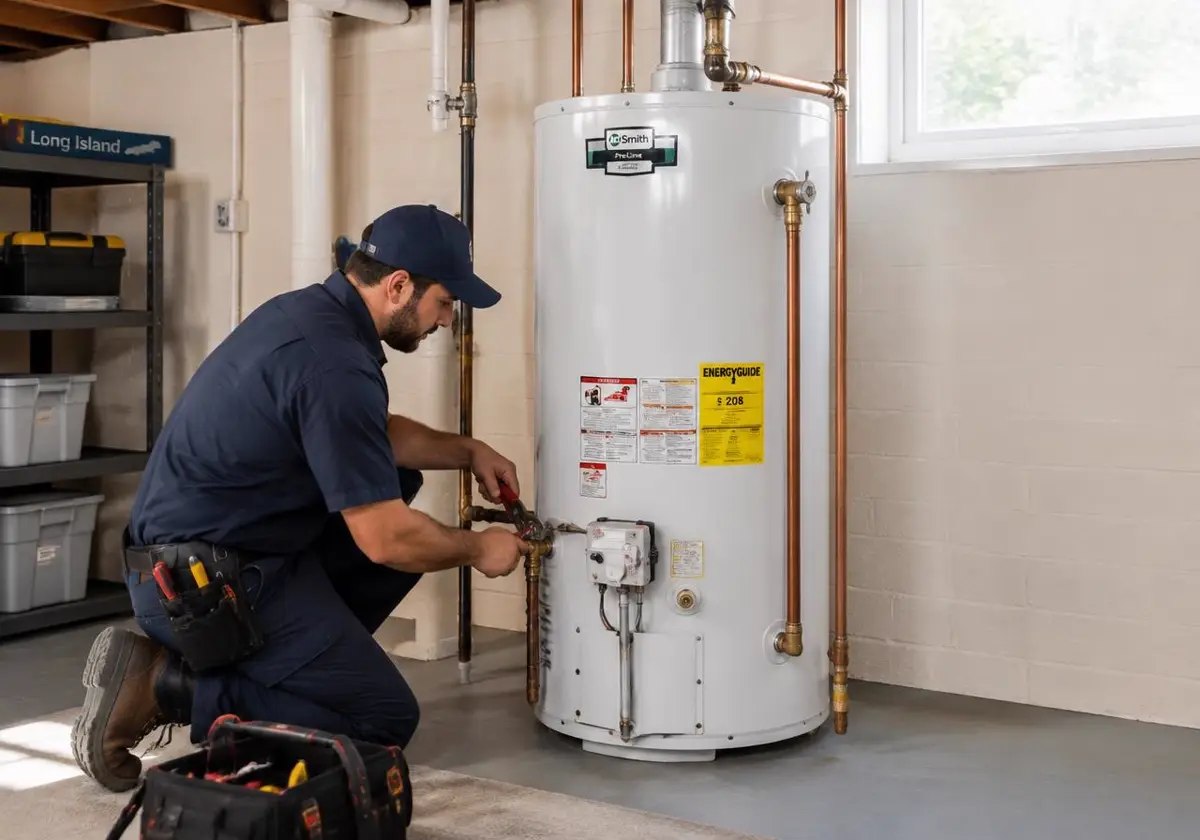
Gas water heater options
When your gas unit fails, you have several choices:
- Standard atmospheric-vent tank: lowest cost, uses your existing chimney or vent
- Power-vent tank: vents through a side wall with a fan, useful when a chimney isn't available
- High-efficiency condensing tank: lower gas use, requires PVC venting and a drain
- Gas tankless: endless hot water, wall-mounted, often requires larger gas supply
What the replacement process looks like
We shut off the gas and water, drain the old tank, and disconnect venting and supply lines. The new water heater is set level, connected, and vented to code.
We then leak-test gas connections, light the burner, verify proper venting draft, and set the temperature. You'll get an explanation of how to relight the pilot and shut the unit off in an emergency.
Signs your gas water heater needs replacing
- Pilot light that won't stay lit after repairs
- Water leaking from the tank
- Rusty hot water or rust around the burner
- Soot or scorch marks around the burner door
- The unit is over 10 years old
- Smell of gas — leave the home and call your gas utility first
If you smell gas, leave your home immediately and call your gas utility or 911 from outside before calling us.
Call now to replace your gas water heater.
(631) 840-6625Repair or replace: which makes sense for you?
A failed thermocouple or gas valve on a younger unit is usually worth repairing.
Soot, scorching, tank leaks, or a unit over 10 years old point toward replacement.
Still unsure? Our water heater repair vs. replace guide walks through tank age, repair cost, efficiency, leaks, and rust so you can decide with confidence. You can also compare water heater repair and water heater replacement on Long Island.
Why hire a licensed Nassau or Suffolk County plumber
Water heaters connect to your gas, electric, and water supply, so mistakes can cause leaks, scalding, or carbon monoxide hazards. A plumber licensed in Nassau or Suffolk County knows local code requirements and installs safety devices correctly.
Many Long Island towns and villages require permits and inspections for water heater work, especially gas units. Requirements vary by municipality, so we confirm what your town needs before the job starts.
Related water heater services on Long Island
- Water Heater Replacement on Long Island
- Tankless Water Heater Installation on Long Island
- Electric Water Heater Replacement on Long Island
- Towns we serve in Nassau and Suffolk
Ready to talk to someone? Contact us to schedule service or get a free estimate.
Gas Water Heater Replacement FAQs
How much does gas water heater replacement cost on Long Island?
The price depends on tank size, venting type, and whether your installation needs updates like a new gas valve, sediment trap, or expansion tank. Power-vent and condensing units cost more than standard models. We provide a written quote before starting.
Do I need a permit to replace a gas water heater on Long Island?
Many Nassau and Suffolk municipalities require a permit and inspection for gas water heater replacement because it involves gas lines and venting. Requirements differ by town and village. We'll confirm what your municipality needs.
Can I switch from gas to electric or heat pump?
Yes, but switching fuel types may require a new electrical circuit and the gas line capped safely. A heat pump water heater can be an efficient alternative, and PSEG Long Island rebates may be available. We'll explain the trade-offs for your home.
What size gas water heater do I need?
Most Long Island homes use a 40- or 50-gallon gas tank, depending on household size and bathrooms. Larger families or homes with soaking tubs may need more capacity or a tankless unit. We'll match the size to your actual usage.